Three-Card Tarot Spread: Past, Present, Future and 10 Other Powerful Layouts
The three-card tarot spread is the most versatile and powerful tool in a tarot reader’s practice. While beginners often gravitate toward it for its simplicity, experienced readers return to it again and again because a well-chosen three-card layout can cut to the heart of any question with surgical precision. Three cards are enough to create a narrative arc, establish tension and resolution, and illuminate the dynamics of virtually any situation without the complexity of larger spreads drowning out the core message.
What makes the three-card spread truly remarkable is its adaptability. By changing the meaning assigned to each position, you transform the same three-card draw into an entirely different reading. Past-Present-Future tells you a story about time. Mind-Body-Spirit maps your holistic well-being. Situation-Action-Outcome gives you a strategic game plan. The cards themselves do not change, but the framework through which you interpret them shifts everything. This is why mastering multiple three-card variations is one of the most valuable skills any tarot practitioner can develop.
In this comprehensive guide, you will learn twelve distinct three-card spread variations, each with clearly defined positions, guidance on when to use it, interpretation strategies, and a fully worked sample reading. Whether you are just starting your tarot journey or looking to deepen your daily practice, these spreads will give you a powerful and flexible toolkit for nearly any question life presents. If you want to practice right now, you can draw your card of the day and then expand to a full three-card reading using one of the layouts below.
Why the Three-Card Spread Works So Well
Before diving into specific layouts, it helps to understand why three cards form such a potent combination from both a structural and symbolic perspective.
The Power of Three in Symbolism
The number three carries profound symbolic weight across virtually every cultural and spiritual tradition. In Christianity, there is the Holy Trinity. In Hinduism, the Trimurti of Brahma, Vishnu, and Shiva. In philosophy, Hegel’s dialectic of thesis, antithesis, and synthesis. In storytelling, the three-act structure of beginning, middle, and end. The human mind naturally organizes information into triads because three is the minimum number required to establish a pattern, create a narrative, and suggest movement or change.
In tarot, this translates to profound reading power. Two cards can show a contrast or comparison, but they lack direction. Four or more cards can introduce nuance but also ambiguity and confusion. Three cards hit the sweet spot where each card has a clear role, and together they tell a complete story with a beginning, a turning point, and a resolution or trajectory.
Practical Advantages
Three-card spreads are ideal for daily practice, quick check-ins, focused questions, and situations where you need clarity without being overwhelmed by information. A reading can be completed in five to fifteen minutes, making it realistic to incorporate into a morning routine or use as a midday reset. The limited number of cards also forces you to trust your intuitive responses rather than getting lost in the permutations that larger spreads generate. If you are working with the Major Arcana or the Minor Arcana, three cards provide just enough context to identify the key energy at play.
How to Prepare for a Three-Card Reading
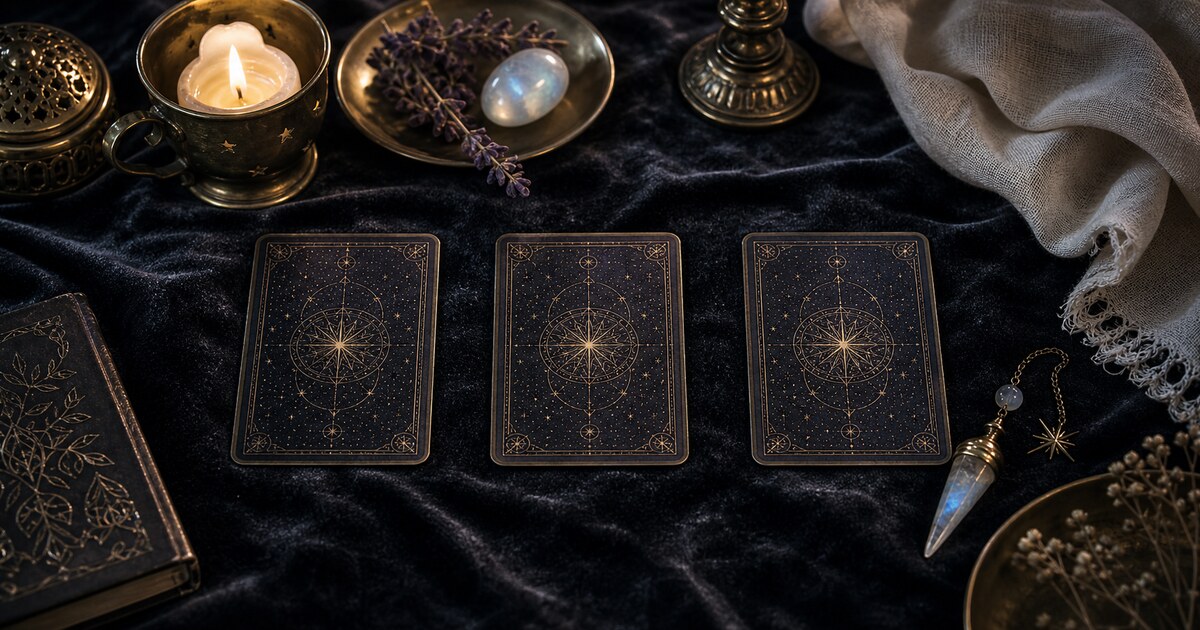
Regardless of which variation you choose, the preparation process is the same. Shuffle your deck while holding your question or intention clearly in mind. You can shuffle overhand, riffle, or spread the cards face-down and mix them with both hands. There is no correct method; use whatever feels natural to you. When you feel a sense of completion, stop shuffling. Draw three cards and place them face-down in a row from left to right. The leftmost card is Position 1, the center card is Position 2, and the rightmost card is Position 3. Turn them over one at a time, beginning with Position 1.
Some readers like to use a significator card, a card chosen deliberately to represent the querent, placed above or below the spread as a focal point. This is optional but can help anchor the reading to a specific person or situation. Now let us explore the twelve most powerful three-card variations.
1. Past, Present, Future Spread
Position Meanings
- Position 1 (Left): The Past — What has already happened. The foundation, roots, or origins of the current situation. Events, choices, or energies that brought you to where you are now.
- Position 2 (Center): The Present — What is happening now. Your current state, the energy surrounding you, the situation as it exists in this moment.
- Position 3 (Right): The Future — Where things are heading. The likely trajectory based on current energies. Not a fixed destiny but a probable outcome if current patterns continue.
When to Use It
This is the most iconic and widely used three-card spread, and for good reason. Use it when you want to understand the arc of a situation, when you feel stuck and want to see whether movement is coming, or when you need to understand how past actions are shaping current circumstances and future possibilities. It is particularly powerful during life transitions, at the start of a new season or year, or whenever you want a panoramic view of a situation’s trajectory.
Interpretation Guidance
The past card reveals what you are carrying into the present. It may point to lessons learned, wounds unhealed, successes to build upon, or patterns that continue to influence you. The present card is your snapshot of now, often the most emotionally resonant card because it mirrors your lived experience. The future card is not a fixed prophecy; it shows the most likely outcome given the momentum of past and present energies. If the future card is unwelcome, the reading is actually giving you valuable information: it is showing you what will happen if nothing changes, which means you have the power to make different choices.
Sample Reading
Question: “What do I need to know about my career path right now?”
Cards drawn: Eight of Pentacles (Past) — The Hermit (Present) — Three of Wands (Future)
Interpretation: The Eight of Pentacles in the past position shows you have invested considerable time and effort in developing your skills. You have been in an apprenticeship phase, honing your craft through repetition and dedication. The Hermit in the present position suggests you are now in a period of deep self-reflection about your professional direction. You may be withdrawing from external noise to listen to your inner wisdom about what truly matters to you in your work. The Three of Wands in the future position is excellent news: it shows that this period of introspection will lead to expansion and new horizons. You are preparing to send your ships out into the world, and the investment you made during the Eight of Pentacles phase, combined with the clarity gained during The Hermit phase, will position you for broader professional reach and new opportunities.
2. Mind, Body, Spirit Spread
Position Meanings
- Position 1 (Left): Mind — Your mental state, thought patterns, beliefs, and intellectual concerns. What occupies your conscious awareness.
- Position 2 (Center): Body — Your physical state, health, energy levels, material circumstances, and relationship with the physical world.
- Position 3 (Right): Spirit — Your spiritual state, intuition, soul purpose, deeper meaning, and connection to something greater than yourself.
When to Use It
Use this spread when you want a holistic check-in on your overall well-being. It is particularly valuable during times of stress when you suspect that an imbalance in one area is affecting the others, during new or full moon phases when you want to take stock of your whole self, or as part of a regular self-care practice. It is also an excellent spread for the beginning of a therapy or coaching session, as it quickly identifies where the primary energy drain or blockage exists.
Interpretation Guidance
Look for alignment or conflict between the three cards. If all three are harmonious, you are in a balanced state. If the Mind card is in conflict with the Spirit card, you may be overthinking and disconnecting from your intuition. If the Body card is challenging while Mind and Spirit are strong, you may need to pay more attention to physical self-care, rest, or your material needs. The relationships between the three positions often reveal more than any single card.
Sample Reading
Question: “How am I doing overall right now?”
Cards drawn: Seven of Swords (Mind) — Four of Pentacles (Body) — The Star (Spirit)
Interpretation: Mentally, the Seven of Swords suggests you are engaged in strategic thinking, possibly with a hint of deception or avoidance. You may be overthinking a problem or trying to outsmart a situation instead of addressing it directly. Physically, the Four of Pentacles shows a tendency toward holding on too tightly, perhaps clutching financial resources, staying in a comfort zone, or resisting physical change. There is a scarcity mentality operating at the material level. Spiritually, however, The Star is beautifully hopeful. Your spirit knows that healing and renewal are available. The disconnect here is clear: your mind and body are in defensive, protective mode, while your spirit is trying to open you up to trust, vulnerability, and hope. The reading suggests that leaning into your spiritual awareness and trusting the healing process would help release the mental strategizing and physical rigidity.
3. Situation, Action, Outcome Spread
Position Meanings
- Position 1 (Left): Situation — The current circumstances as they truly are, stripped of projections and assumptions.
- Position 2 (Center): Action — The recommended course of action. What you should do, how you should approach the situation, or what energy to embody.
- Position 3 (Right): Outcome — The likely result if you follow the suggested action.
When to Use It
This is the ultimate decision-making spread. Use it when you face a specific dilemma and need concrete guidance on what to do. It works best when you have a clear question about a particular situation rather than a general, open-ended inquiry. Job offers, relationship decisions, financial choices, creative projects, and health decisions all benefit from this action-oriented framework.
Interpretation Guidance
Pay special attention to the Action card. This is the card you can actually work with. The Situation card confirms or reframes your understanding of what is happening, and the Outcome card shows where the Action leads. If the Outcome card is unfavorable, do not ignore the Action card; instead, consider what the opposite or complementary energy to the suggested Action might produce a better result. The spread is showing you one path; there are always others.
Sample Reading
Question: “What should I do about the conflict with my business partner?”
Cards drawn: Five of Wands (Situation) — Queen of Cups (Action) — Six of Wands (Outcome)
Interpretation: The Five of Wands confirms that the situation is genuinely contentious; there are competing visions, egos clashing, and a sense that everyone is fighting for their own position without listening to others. The Action card, Queen of Cups, advises you to lead with emotional intelligence, compassion, and deep listening. Rather than matching the combative energy of the Five of Wands, you are being called to bring the nurturing, empathetic, emotionally mature energy of the Queen of Cups to the table. Hear your partner out. Acknowledge their feelings. Create a safe space for honest dialogue. The Outcome card, Six of Wands, shows that this approach will lead to recognition and success. By choosing emotional intelligence over competition, you will earn respect and find a resolution that allows both parties to feel victorious.
4. What You Think, What You Feel, What You Should Do Spread
Position Meanings
- Position 1 (Left): What You Think — Your conscious thoughts, rational analysis, and intellectual assessment of the situation.
- Position 2 (Center): What You Feel — Your emotional truth, the feelings beneath the surface that you may not be fully acknowledging.
- Position 3 (Right): What You Should Do — The wisest course of action that integrates both thought and feeling.
When to Use It
Use this spread when you feel a disconnect between your head and your heart. It is exceptionally valuable when you know what you think you should do but something inside you resists, or conversely, when your feelings are pulling you in a direction your logic rejects. It is also useful when you feel confused because you cannot tell whether your response to a situation is primarily intellectual or emotional. This spread pulls apart the two channels and then offers integrative guidance.
Sample Reading
Question: “I am thinking about moving to a new city for a job. What should I know?”
Cards drawn: Ace of Pentacles (Think) — Five of Cups (Feel) — The Chariot (Do)
Interpretation: Your rational mind (Ace of Pentacles) sees this as a golden opportunity: new financial potential, a fresh material beginning, the promise of prosperity. Your thinking is sound; this is objectively a good offer. But your emotions (Five of Cups) reveal grief about what you would leave behind. You are focused on losses: the friendships, the familiar places, the life you have built. Both responses are valid. The action card, The Chariot, says: move forward with determination. The Chariot is about harnessing opposing forces and channeling them in one direction. You can honor your grief while still pursuing the opportunity. The key is to commit fully once you decide, rather than remaining ambivalent.
5. You, The Other Person, The Relationship Spread
Position Meanings
- Position 1 (Left): You — Your energy, feelings, and behavior within the relationship.
- Position 2 (Center): The Other Person — Their energy, feelings, and behavior within the relationship.
- Position 3 (Right): The Relationship — The dynamic between you, the energy that exists in the space between you.
When to Use It
This is one of the most useful spreads for any type of relationship: romantic, platonic, familial, or professional. Use it when you want to understand the dynamics at play between you and another person, when communication has broken down and you need insight into what each person is contributing to the dynamic, or when you are trying to decide whether to invest more energy into a relationship or step back. For deeper relationship analysis, you might also explore synastry to see how your birth charts interact.
Interpretation Guidance
The third card is the most important here because it represents the entity of the relationship itself, which is always more than the sum of its parts. Two cards might look positive individually, but the relationship card might reveal that the dynamic between the two people creates friction or stagnation. Conversely, two challenging individual cards might produce a surprisingly constructive relationship card, showing that the tension between the two people actually generates growth.
Sample Reading
Question: “What is the dynamic between me and my sister right now?”
Cards drawn: Page of Swords (You) — Ten of Wands (Other Person) — Two of Cups (Relationship)
Interpretation: You are in Page of Swords energy in this relationship: curious, perceptive, perhaps a bit intellectually detached, asking questions, and seeking truth. Your sister, represented by the Ten of Wands, is carrying an enormous burden. She is overwhelmed, overcommitted, and struggling under the weight of responsibilities. The relationship card, Two of Cups, is beautiful: despite the different places you are each in, the core bond between you is one of genuine mutual love, respect, and emotional reciprocity. The reading suggests that your curious, communicative energy (Page of Swords) could be directed toward helping lighten your sister’s load (Ten of Wands), and that doing so would strengthen the deep bond (Two of Cups) that already exists.
6. Strengths, Weaknesses, Advice Spread
Position Meanings
- Position 1 (Left): Strengths — What you are doing well, what resources or qualities you bring to the situation, what is working in your favor.
- Position 2 (Center): Weaknesses — Where you are vulnerable, what you are not seeing clearly, habits or patterns that are undermining you.
- Position 3 (Right): Advice — What the cards recommend to leverage your strengths, address your weaknesses, and move forward wisely.
When to Use It
This spread is ideal for personal development work, goal assessment, and strategic planning. Use it at the beginning of a new project, when evaluating your performance in any area of life, or when you want an honest assessment of where you stand. It pairs well with natal chart analysis, as the strengths and weaknesses revealed often echo the themes in your astrological chart.
Sample Reading
Question: “I am preparing to launch my own business. What should I know?”
Cards drawn: King of Pentacles (Strength) — Seven of Cups (Weakness) — Four of Wands (Advice)
Interpretation: Your strength is the King of Pentacles: you have practical business acumen, financial wisdom, and the ability to build something enduring. You know how to manage resources and create material security. Your weakness, the Seven of Cups, reveals a tendency to fantasize about too many options without committing to one clear path. You may be scattered across multiple ideas, business models, or visions, and this dispersed focus is preventing progress. The advice card, Four of Wands, says: establish a stable foundation first. Before chasing every shiny possibility, build the infrastructure. Celebrate the milestones. Create a home base for your business and let that solid ground give you the confidence to grow. Pick one vision from the Seven of Cups and build it with the King of Pentacles energy you already possess.
7. Option A, Option B, What You Need to Know Spread
Position Meanings
- Position 1 (Left): Option A — The energy, trajectory, and likely outcome of the first choice.
- Position 2 (Center): Option B — The energy, trajectory, and likely outcome of the second choice.
- Position 3 (Right): What You Need to Know — Hidden information, a factor you have not considered, or deeper wisdom that should inform your decision.
When to Use It
Use this when you are torn between two specific options and cannot decide. It works for any binary decision: two job offers, two cities, staying or leaving, speaking up or staying silent, committing or keeping options open. The third card is the secret weapon of this spread because it often reveals something neither option accounts for, adding a dimension of insight that breaks the deadlock.
Sample Reading
Question: “Should I accept the promotion (Option A) or stay in my current role and focus on my side project (Option B)?”
Cards drawn: Nine of Pentacles (Option A) — Knight of Wands (Option B) — The Tower (What You Need to Know)
Interpretation: Option A, the Nine of Pentacles, shows a path of financial security, independence, and elegant self-sufficiency. The promotion would bring material comfort and the satisfaction of having earned your success through disciplined effort. Option B, the Knight of Wands, offers adventure, passionate pursuit, creative fire, and forward momentum, but with less financial security and more risk. Both options have clear appeal. But the third card, The Tower, introduces a jolt of truth: something in your current structure is going to change dramatically regardless of what you choose. The Tower suggests that external forces may disrupt one or both options in ways you have not anticipated. This information does not eliminate either choice but adds urgency. Which option positions you better when the unexpected happens? The Nine of Pentacles offers stability in disruption, while the Knight of Wands offers mobility. The Tower is asking you which kind of resilience matters more to you.
8. Subconscious, Conscious, Superconscious Spread
Position Meanings
- Position 1 (Left): Subconscious — What lurks beneath your awareness. Hidden fears, desires, memories, or patterns that influence you without your knowledge.
- Position 2 (Center): Conscious — What you are aware of. Your known thoughts, acknowledged feelings, and recognized circumstances.
- Position 3 (Right): Superconscious — Higher guidance, universal wisdom, your soul’s perspective. What your higher self wants you to understand.
When to Use It
This is a deeply psychological spread, ideal for shadow work, therapy-adjacent self-exploration, and spiritual growth. Use it when you sense that something beneath the surface is driving your behavior, when you feel blocked without understanding why, or when you want guidance that transcends your current perspective. This spread pairs naturally with Jungian analysis and is an excellent complement to astrological work with Pluto, the twelfth house, and the South Node, all of which deal with unconscious patterns.
Interpretation Guidance
The subconscious card often delivers the reading’s most powerful insight because it reveals what you cannot see on your own. Approach it with curiosity rather than judgment. The conscious card usually resonates immediately with your lived experience. The superconscious card offers the broadest, most spiritually elevated perspective and can sometimes feel abstract; sit with it and let it unfold over time rather than demanding immediate clarity.
Sample Reading
Question: “Why do I keep sabotaging my relationships?”
Cards drawn: The Moon (Subconscious) — Two of Swords (Conscious) — Temperance (Superconscious)
Interpretation: The subconscious card, The Moon, reveals deep fears, illusions, and unresolved emotional material from the past. Something from your history, possibly childhood experiences or past relationship trauma, has created a landscape of anxiety and distrust that operates beneath your conscious awareness. It is generating fear responses that look like sabotage from the outside. At the conscious level, the Two of Swords shows that you experience this as indecision and emotional paralysis. You feel stuck between choices, unable to fully commit, refusing to look at what you are feeling. You have erected intellectual defenses to avoid confronting the emotional pain The Moon represents. Your superconscious guidance, Temperance, says that healing comes through patient integration. You do not need to conquer your fears all at once. You need to slowly, gently blend the conscious and subconscious material, finding middle ground between avoidance and overwhelm. This is shadow integration work: acknowledging the fears without being ruled by them.
9. What to Keep, What to Release, What to Embrace Spread
Position Meanings
- Position 1 (Left): What to Keep — What is serving you well and should be maintained, protected, or nurtured.
- Position 2 (Center): What to Release — What has run its course and needs to be let go, surrendered, or grieved.
- Position 3 (Right): What to Embrace — What new energy, opportunity, or perspective is ready to enter your life if you make space for it.
When to Use It
This is an ideal spread for transitions: New Year’s reflections, birthdays, new moons, full moons, seasonal changes, or any moment when you are moving from one life chapter to another. It is also powerful during decluttering sessions, whether physical, emotional, or spiritual. The framework of keep-release-embrace provides a clear action plan rather than just insight.
Sample Reading
Question: “What guidance do I need for this lunar cycle?”
Cards drawn: Six of Cups (Keep) — King of Swords reversed (Release) — Ace of Wands (Embrace)
Interpretation: Keep the Six of Cups: maintain your connections to nostalgia, childhood joy, and the relationships that feel pure and uncomplicated. Your capacity for innocent pleasure and emotional generosity is a treasure worth protecting. Release the reversed King of Swords: let go of cold intellectualism, harsh self-criticism, and the tendency to use logic as a weapon against yourself or others. The reversed King of Swords can represent cutting communication, manipulation through intellect, or a tyrannical inner critic. It has served you in some capacity, perhaps as protection, but it is now doing more harm than good. Embrace the Ace of Wands: a new creative spark, a burst of passion, a fresh beginning in something that excites you. As you release the rigid intellectualism, space opens for pure creative fire to enter.
10. Morning Energy, Afternoon Energy, Evening Energy Spread
Position Meanings
- Position 1 (Left): Morning — The energy that will characterize the first part of your day. How the day begins, what to expect in the early hours.
- Position 2 (Center): Afternoon — The energy that will dominate the middle of your day. How things shift, what intensifies or resolves.
- Position 3 (Right): Evening — The energy that will characterize the end of your day. How things settle, what you carry into the night.
When to Use It
This is the ideal daily pull spread. Use it every morning as part of your routine to gain a preview of the day’s energetic landscape. It is more nuanced than a single card of the day because it acknowledges that energy shifts throughout the day. You can check in with each card as you reach that portion of the day, building a real-time dialogue between the reading and your lived experience. Over time, this practice sharpens your intuitive abilities considerably.
Interpretation Guidance
Do not read these positions too literally. “Morning” does not mean exactly 8 a.m. to noon. The three positions describe an energetic arc: how the day opens, how it develops, and how it resolves. Look for the progression between cards. Does the day start heavy and lighten, or start easily and grow more challenging? Is there a turning point in the afternoon position? This flow-of-energy perspective is more useful than treating each card as an isolated prediction.
Sample Reading
Cards drawn: Two of Pentacles (Morning) — Strength (Afternoon) — Ten of Cups (Evening)
Interpretation: The morning begins with juggling energy. The Two of Pentacles shows you balancing multiple demands, possibly feeling like you are plate-spinning to keep everything going. This is a busy, somewhat frenetic start. By afternoon, Strength appears, suggesting that the juggling act will require you to access your inner reserves of patience, courage, and gentle power. This is not brute-force energy but the quiet, confident strength of someone who tames the lion through compassion rather than force. The evening resolves beautifully with the Ten of Cups: emotional fulfillment, family harmony, contentment. Whatever challenges the morning and afternoon bring, the day ends in a place of deep satisfaction and gratitude. The arc is reassuring: effort, inner strength, and then genuine happiness.
11. Challenge, Hidden Influence, Resolution Spread
Position Meanings
- Position 1 (Left): Challenge — The primary obstacle, difficulty, or source of friction you are currently facing.
- Position 2 (Center): Hidden Influence — An unseen factor affecting the challenge. This could be a person, a belief, a past event, or an energy you have not recognized.
- Position 3 (Right): Resolution — How the challenge can be resolved or what energy is needed to move through it.
When to Use It
This spread excels when you are stuck on a problem that will not yield to direct effort. The hidden influence position is the key: it uncovers the factor you are not seeing, which is often the real reason the challenge persists. Use it for recurring problems, situations where you feel like you have tried everything, and any circumstance where the real issue seems to be just out of reach of your conscious understanding.
Sample Reading
Question: “Why can’t I seem to save money no matter how hard I try?”
Cards drawn: Five of Pentacles (Challenge) — The Lovers reversed (Hidden Influence) — Eight of Pentacles (Resolution)
Interpretation: The Challenge card, Five of Pentacles, confirms the experience of financial hardship and scarcity. You genuinely feel left out in the cold, like abundance is available to everyone except you. The Hidden Influence, The Lovers reversed, reveals something unexpected: the underlying issue may be a relationship or a value system misalignment. Perhaps a partner’s spending habits are undermining your efforts, or perhaps your spending is driven by trying to please others, maintain appearances, or fill an emotional void that a relationship is not satisfying. The money problem has a relationship root. The Resolution, Eight of Pentacles, prescribes disciplined, methodical work. Specifically, this is about mastering the craft of financial management with the same dedication a craftsman brings to their trade. Take a course, create a detailed budget, learn the skills. But crucially, address the relational issue the Hidden Influence revealed, because no amount of budgeting will help if the underlying value misalignment continues to drain resources.
12. Opportunity, Challenge, Key Insight Spread
Position Meanings
- Position 1 (Left): Opportunity — What possibility is available to you right now, what door is open, what potential is ripe.
- Position 2 (Center): Challenge — What stands between you and that opportunity, the obstacle or test you must face.
- Position 3 (Right): Key Insight — The essential piece of wisdom that, once understood, will allow you to seize the opportunity despite the challenge.
When to Use It
Use this spread when you sense that something good is available but you are not quite able to grasp it. It is excellent at the start of a new project, a new month, or a new astrological season. The framework is inherently optimistic because it begins from the premise that an opportunity exists and then works backward to help you access it. It is also useful for manifesting work, especially when combined with moon phase awareness.
Sample Reading
Question: “What opportunity is available to me this month?”
Cards drawn: Three of Cups (Opportunity) — Four of Swords reversed (Challenge) — The High Priestess (Key Insight)
Interpretation: The Opportunity card, Three of Cups, shows that community, celebration, and joyful social connection are available to you this month. There are friendships to deepen, collaborations to form, or celebrations to participate in that will enrich your life. The Challenge card, Four of Swords reversed, suggests that you are resisting the rest and reflection needed before you can fully engage. You may be mentally exhausted or pushing yourself too hard, and this depletion is preventing you from showing up fully in social settings. The Key Insight, The High Priestess, says that the answer lies in trusting your intuition and accessing the deeper wisdom within you. Do not force the social connections; instead, turn inward first, replenish your inner well, and then the social opportunities will unfold naturally. The High Priestess knows without effort. Trust that the right connections will appear when you are aligned with your inner truth.
Advanced Three-Card Techniques
Combining Spreads for Deeper Readings
Once you are comfortable with individual three-card variations, you can combine them for more comprehensive readings. For example, start with a Past-Present-Future spread to understand the arc of a situation, then draw a second three-card Situation-Action-Outcome spread focused specifically on what the first reading revealed. This layered approach gives you both the big picture and a concrete action plan without the complexity of a full Celtic Cross.
Reading Card Interactions
In any three-card spread, pay attention to the relationships between cards, not just the individual meanings. Look for elemental patterns: are all three cards from the same suit, suggesting a focused theme? Is there a mix of Major and Minor Arcana, indicating that both everyday and profound energies are at play? Do the numerical values create a progression (such as 3, 5, 8) suggesting growth, or a regression (8, 5, 2) suggesting simplification? Does one card seem to visually mirror or contrast another?
Suit Dominance and Absence
Notice which suits are present and which are absent. Three Cups cards suggest the situation is primarily emotional. Three Swords cards point to mental and communicative themes. The absence of a suit is equally telling: a reading with no Pentacles may indicate that material or practical concerns are not the real issue, even if the querent framed their question in material terms.
Major Arcana Count
In a three-card spread, the number of Major Arcana cards matters significantly. Zero Major Arcana suggests the situation is within your control and involves everyday, manageable forces. One Major Arcana card highlights one position as carrying extra weight and significance. Two Major Arcana cards indicate a situation with serious karmic or archetypal dimensions. Three Major Arcana cards signal a period of intense personal transformation where powerful forces are at work.
Reversed Cards in Three-Card Spreads
If you read reversals, they add another dimension to three-card spreads. A reversed card in any position suggests blocked, delayed, internalized, or shadow-side expression of that card’s energy. In the three-card framework, reversals often indicate where the energy is stuck or where resistance exists. A spread with all three cards reversed might suggest that the querent is deeply out of alignment or that the situation needs significant inner work before outer action will be effective.
Building a Daily Three-Card Practice
Creating Your Routine
The most powerful way to develop your tarot skills is to pull three cards every day. Choose one spread variation and use it consistently for at least a month before switching to another. This repetition builds fluency with the positions and allows you to track patterns over time. Keep a tarot journal and record each day’s cards, your interpretation, and at the end of the day, what actually happened and how the cards related to your experience.
A Month-Long Practice Plan
| Week | Spread Variation | Focus |
|---|---|---|
| Week 1 | Past, Present, Future | Understanding narrative arcs and temporal flow |
| Week 2 | Mind, Body, Spirit | Holistic self-awareness and balance assessment |
| Week 3 | Situation, Action, Outcome | Decision-making and action orientation |
| Week 4 | Morning, Afternoon, Evening | Daily energy tracking and real-time validation |
Tracking Your Accuracy
At the end of each week, review your journal entries. Where were you accurate? Where did the cards surprise you? Where did you miss the message entirely? This reflective practice is where genuine growth happens. You will begin to notice which cards consistently appear in certain positions, which suit shows up most often for you, and which cards you have the most difficulty interpreting. These patterns become the curriculum for your ongoing tarot education.
Common Mistakes With Three-Card Spreads
Overcomplicating the Reading
The beauty of three cards is their simplicity. Resist the urge to pull additional “clarifier” cards when a reading feels unclear. If the message is not immediately obvious, sit with it. Journal about it. Return to it later in the day. The clarity will come. Pulling extra cards often muddies the message rather than clarifying it, because now you have five or six cards without a positional framework to organize them.
Ignoring the Positions
Each card’s meaning changes based on its position. The Ten of Swords in the Past position is very different from the Ten of Swords in the Action position. The Past Ten of Swords says you have already gone through a devastating ending. The Action Ten of Swords might be telling you to accept a complete ending and stop trying to revive something that is over. Always read the card through the lens of its position.
Reading Too Literally
Tarot cards speak in symbols, not in literal predictions. The Death card does not mean someone will die. The Tower does not mean a building will collapse. The Three of Swords does not mean someone will break your heart today. These are archetypal energies, and your job is to understand how those energies manifest in the specific context of your question and the specific position they occupy.
Not Considering the Question
The same card in the same position means different things depending on the question asked. The Ace of Cups in the Present position means something very different if the question is about career versus romance. Always interpret cards in direct relationship to what was asked. If no specific question was posed, the cards will address what your subconscious most needs to hear, which requires even more intuitive sensitivity from the reader.
Three-Card Spreads and Tarot Combinations
Powerful Three-Card Combinations to Watch For
Certain card combinations in three-card spreads carry intensified meaning. Here are combinations that experienced readers pay special attention to.
| Combination | Meaning |
|---|---|
| Three Major Arcana | A pivotal, fateful period. Forces larger than your individual will are at work. Pay close attention. |
| Three cards of one suit | The situation is dominated by one energy: Cups (emotional), Wands (creative/passionate), Swords (mental), Pentacles (material). |
| Sequential numbers (e.g., 5-6-7) | A clear progression is underway. Events are unfolding in a natural, step-by-step sequence. |
| All Court Cards | Other people are the primary factor. The situation is about personalities and dynamics more than events. |
| Death + Tower + any card | Profound, unavoidable transformation. The old structure must completely disintegrate before the new can emerge. |
| The Star + The Sun + The World | Exceptionally positive outcome. Healing leads to joy leads to completion and fulfillment. |
| Three reversed cards | Significant blockage or resistance. Internal work is needed before external progress is possible. |
Elemental Dignity Analysis
Advanced readers can apply elemental dignity analysis to three-card spreads. Each suit corresponds to an element: Wands (Fire), Cups (Water), Swords (Air), Pentacles (Earth). In a three-card line, the center card is modified by the cards flanking it. Friendly elements (Fire and Air, Water and Earth) strengthen the center card. Hostile elements (Fire and Water, Air and Earth) weaken it. Neutral combinations (Fire and Earth, Water and Air) have a moderating effect. This adds another interpretive layer for experienced readers who want to extract maximum meaning from three cards.
Choosing the Right Spread for Your Question
With twelve variations available, how do you choose the right one? Here is a quick reference guide.
| If You Want To… | Use This Spread |
|---|---|
| Understand the timeline of a situation | Past, Present, Future |
| Check your overall well-being | Mind, Body, Spirit |
| Get a concrete action plan | Situation, Action, Outcome |
| Resolve a head vs. heart conflict | Think, Feel, Do |
| Understand a relationship dynamic | You, Other Person, Relationship |
| Assess your readiness for a goal | Strengths, Weaknesses, Advice |
| Decide between two options | Option A, Option B, Need to Know |
| Explore your unconscious patterns | Subconscious, Conscious, Superconscious |
| Navigate a life transition | Keep, Release, Embrace |
| Preview your day’s energy | Morning, Afternoon, Evening |
| Solve a stubborn problem | Challenge, Hidden Influence, Resolution |
| Identify and seize an opportunity | Opportunity, Challenge, Key Insight |
From Three Cards to Bigger Spreads
Once you have mastered the three-card framework, you will find that larger spreads become much more accessible. The Celtic Cross, for example, is essentially an expanded three-card spread with additional positions for nuance. The core narrative structure of beginning-middle-end, or problem-process-resolution, that you develop through three-card work is the same skill that drives effective interpretation of ten-card or even fifteen-card layouts.
The three-card spread is not a beginner’s crutch that you eventually outgrow. It is a foundational tool that professional readers use every day because of its precision, flexibility, and power. Whether you are doing a quick morning check-in or working through a complex life decision, three cards and the right positional framework will give you remarkably clear, actionable guidance. The twelve variations in this guide give you a toolkit sophisticated enough to address virtually any question life can throw at you. Choose the framework that fits your question, trust the cards, and trust yourself.