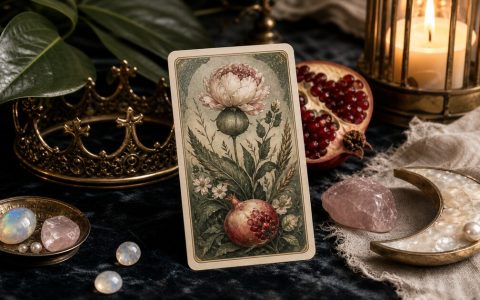
Six of Cups Tarot Card Meaning
The Six of Cups is the tarot’s card of nostalgia, innocence, and the tender, bittersweet pull of the past. It is the card that appears when memories are calling, when the scent of something familiar transports you back to a time that feels simpler, warmer, and more magical than the present. Within the suit of Cups, which governs the emotional and relational dimensions of human experience, the Six occupies a uniquely gentle and sentimental space, speaking to the way our past experiences, particularly our childhood experiences, continue to shape our emotional lives long after the events themselves have passed.
But the Six of Cups is more than a simple nostalgia card. It speaks to the concept of emotional inheritance, the gifts and wounds we carry from our earliest experiences, the patterns we learned in childhood that continue to influence how we love, how we trust, how we give and receive, and how we feel at home in the world. It asks us to examine our relationship with our past, not to live in it but to understand how it lives in us, and to reclaim the qualities of innocence, wonder, and open-hearted generosity that the child within us still possesses.
In this comprehensive guide, you will explore every facet of the Six of Cups: its charming visual symbolism, its upright and reversed meanings, its significance in love, career, health, and spiritual readings, its behavior in yes/no questions and card combinations, and the healing wisdom it offers for integrating the past into a more conscious and compassionate present through your tarot practice.
Six of Cups Description and Symbolism
The Rider-Waite-Smith depiction of the Six of Cups is one of the most charming and visually warm images in the tarot. In a courtyard or garden setting, two children are depicted, one slightly older and taller, the other smaller and younger. The older child is offering a cup filled with white flowers to the younger child, who reaches up to receive it with an expression of delight and trust. Five more cups, also filled with white flowers, are arranged around them. In the background, a guard or adult figure walks away, and buildings with a medieval architectural style suggest a secure, established environment. The entire scene radiates warmth, generosity, and the innocent sweetness of childhood.
The Two Children
The two children represent innocence, trust, and the pure, uncomplicated form of love and generosity that exists before the complexities of adult life introduce doubt, calculation, and self-protection. The older child gives freely, without expectation of return, without calculation of cost, without the self-consciousness that plagues adult acts of generosity. The younger child receives with equal openness, without suspicion, without the need to reciprocate immediately, without the fear that accepting a gift creates an obligation. This exchange represents the purest form of human connection: giving for the joy of giving, receiving for the joy of receiving.
The children also represent the inner child that lives within every adult, the part of you that still experiences the world with wonder, that still feels things with the full, unfiltered intensity of youth, and that still longs for the simple, uncomplicated forms of love and security that characterized your earliest experiences. The Six of Cups invites you to reconnect with this inner child, to listen to their needs and desires, and to honor the ways in which your childhood experiences continue to shape your adult life.
The Cups with White Flowers
Six golden cups are arranged throughout the scene, each filled with white star-shaped flowers. The white flowers symbolize purity, innocence, and the untainted emotional experiences of childhood. They also represent the beautiful memories and positive emotional legacies that your past has bequeathed to you. The fact that the flowers are arranged in cups suggests that these memories and emotional legacies are contained, preserved, and carried forward through time, available to nourish and comfort you whenever you need to draw on them.
The six cups also represent a kind of emotional abundance that comes from the past. You are not starting from zero. You carry within you the love you received, the joy you experienced, the lessons you learned, and the connections you formed during the earliest and most formative period of your life. These are your emotional inheritance, and the Six of Cups invites you to acknowledge, honor, and draw upon this inheritance as a source of strength and comfort in your present life.
The Garden Setting
The courtyard or garden setting evokes a sense of safety, enclosure, and protected space. This is not the wild, untamed landscape of adventure and risk but the cultivated, enclosed space of home and security. The garden represents the emotional environment of childhood at its best: safe, contained, beautiful, and carefully tended by the adults who created and maintained it. For those whose childhood was indeed safe and nurturing, the garden confirms the gift of that experience. For those whose childhood was less idyllic, the garden represents the emotional safety that you longed for and that you are now capable of creating for yourself.
The Departing Figure
In the background, an adult figure walks away, their back to the viewer. This figure has been interpreted in various ways: as a parent or guardian who is giving the children space to interact freely, as a representation of the adult self stepping back to allow the inner child to emerge, or as the passage of time moving forward while the emotional scene remains frozen in a moment of innocence. Whatever the specific interpretation, the departing figure reinforces the idea that the scene depicted is temporary and precious, a moment from the past that is captured in memory but cannot be held in reality.
Six of Cups Upright Meaning
When the Six of Cups appears upright in a reading, it invites you to engage with the past in a conscious and healing way. Memories are rising to the surface. People, places, and experiences from your earlier life are calling for your attention. This is not random. The past is surfacing because it has something to offer you right now, whether that is comfort, clarity, a lesson that needs to be revisited, or an emotional pattern that needs to be recognized and addressed.
The upright Six of Cups frequently appears when you are experiencing nostalgia, a longing for the simplicity, security, and innocence of an earlier time. This nostalgia can be sweet, a warm wave of gratitude for the good experiences that shaped you, or it can be bittersweet, tinged with the awareness that the past cannot be recaptured and that the innocence you long for has been irreversibly lost to the complexities of adult life. Either way, the card asks you to honor the feeling without becoming trapped by it, to appreciate the past without idealizing it, and to carry the best of your earlier experiences forward into your present life.
The Six of Cups upright also speaks to themes of generosity, kindness, and the impulse to share your emotional abundance with others. Like the older child offering a cup to the younger one, you may be in a position to give something beautiful and valuable to someone who needs it. This giving is not strategic or calculated. It is the spontaneous, generous overflow of a heart that has more than enough and wants to share. The card encourages you to follow this impulse, to give freely and without expectation, and to trust that generosity creates its own rewards.
Reunions and reconnections are another common manifestation of the Six of Cups upright. Old friends, former lovers, childhood acquaintances, family members you have not seen in years, these figures from your past may re-enter your life or come to mind with unusual frequency. The card suggests that these reconnections have value and that engaging with them can bring healing, closure, or the rediscovery of bonds that time had weakened but not broken.
On a psychological level, the Six of Cups upright often indicates the need to examine your childhood and its influence on your current emotional patterns. The way you love, the way you fight, the way you trust or distrust, the way you handle conflict, intimacy, and vulnerability, all of these patterns have roots in your earliest experiences. The Six of Cups invites you to trace these patterns back to their origins, not to blame or shame anyone but to understand yourself more deeply and to make conscious choices about which patterns you want to keep and which ones you want to transform.
Six of Cups Reversed Meaning
When the Six of Cups appears reversed, the relationship with the past has become problematic in some way. Instead of the healthy engagement with memories and nostalgia that the upright card offers, the reversed Six of Cups suggests that you are either stuck in the past, running from it, or distorting it in ways that are interfering with your ability to live fully in the present.
The most common interpretation of the Six of Cups reversed is living in the past. You may be so caught up in memories, whether idealized or painful, that you are unable to engage with the present moment. You compare every current experience unfavorably with a past that you have elevated to mythological status. Your best days are always behind you. Your most important relationships are the ones that have already ended. Your happiest memories are the ones you keep reliving. This orientation toward the past, while understandable, is slowly draining your present of its vitality and potential.
Alternatively, the Six of Cups reversed can indicate the refusal to engage with the past at all, the determination to leave everything behind and never look back. While moving forward is generally healthy, the refusal to acknowledge and process past experiences can create its own problems. Unexamined childhood wounds continue to influence your behavior from the unconscious. Unprocessed grief accumulates and eventually demands attention. The parts of your past that you refuse to face become the very things that secretly control your present.
The reversed Six of Cups can also point to a naivety or childishness that is no longer appropriate. The innocence that the upright card celebrates can curdle, when reversed, into immaturity, unrealistic expectations, and the refusal to accept adult responsibility. You may be approaching relationships, career decisions, or financial matters with the magical thinking of a child rather than the discernment of an adult. The reversed card gently insists that while the inner child deserves to be honored, the outer adult needs to be the one making the decisions.
In some readings, the reversed Six of Cups can indicate unresolved childhood trauma that is affecting your current emotional health. The past is not just calling; it is intruding, overwhelming you with feelings and reactions that seem disproportionate to the present situation because they are actually responding to much earlier experiences. If this resonates, the reversed card strongly encourages professional support to help you process and integrate these experiences safely.
Six of Cups in Love and Relationships
Upright Love Meaning
In love readings, the Six of Cups upright often indicates a connection with deep roots. This could be a childhood sweetheart who has returned, a partner with whom you share a long history, or a new relationship that feels strangely familiar, as though you have known this person before. The card suggests that the emotional foundation of this connection extends beyond the present moment, drawing on deeper currents of shared experience, karmic connection, or emotional resonance that transcends the timeline of the current relationship.
For those in established relationships, the Six of Cups can indicate a period of renewed sweetness and innocence within the partnership. You and your partner are rediscovering the playful, tender, uncomplicated aspects of your love that may have been buried under the weight of adult responsibilities and relationship complexities. The card encourages you to nurture these qualities, to create space for silliness, sweetness, and the kind of uncalculated generosity that characterized the beginning of your love story.
For singles, the Six of Cups often points to the return of someone from the past, an ex, a former crush, or a person from your earlier life who re-enters your world in a romantic context. Whether this reconnection is healthy or harmful depends on the surrounding cards and the circumstances of the original parting. The card does not automatically endorse the reconnection; it simply announces its likelihood and invites you to approach it with both openness and discernment.
The Six of Cups in love also highlights the influence of your family of origin on your romantic patterns. How you saw love modeled in your childhood directly influences how you experience and express love as an adult. The card may be inviting you to examine these influences honestly, celebrating the patterns that serve you and working to transform the ones that do not.
Reversed Love Meaning
The Six of Cups reversed in love readings often indicates that the past is interfering with the present in unhealthy ways. You may be unable to commit to a current partner because you are still emotionally attached to an ex. You may be projecting past relationship trauma onto a new partner who does not deserve it. You may be idealizing a past relationship to the point where no current relationship can measure up. The reversed card urges you to release the grip of the past and give the present a genuine chance.
The reversal can also indicate the need to break free from family patterns that are sabotaging your love life. If you grew up witnessing unhealthy relationship dynamics, you may unconsciously recreate them in your own partnerships. The reversed Six of Cups invites you to become conscious of these inherited patterns and to choose differently, to write a new love story rather than automatically replaying your parents’ story.
Six of Cups in Career and Work
In career readings, the Six of Cups upright may indicate a connection between your past experiences and your current professional path. Skills, interests, or passions that you developed earlier in life are proving relevant and valuable in your current work. A career path that connects to your childhood dreams or early interests may be opening up. The card suggests that your professional fulfillment may lie in reconnecting with what you loved before the practical demands of adult life steered you in a different direction.
The card can also indicate reconnecting with former colleagues, returning to a previous employer, or finding opportunities through professional connections from your past. Networks you built years ago may prove unexpectedly valuable now. People who knew you in an earlier phase of your career may have opportunities to offer or insights to share that are relevant to your current situation.
Reversed in career, the Six of Cups suggests that clinging to old professional patterns or outdated skills is holding you back. The way things used to be done is not the way they need to be done now, and your nostalgia for the old approach is preventing you from adapting to the current reality. The reversed card encourages professional updating, skill development, and the willingness to release methods that, however comfortable, are no longer effective.
Six of Cups in Finances
Financially, the Six of Cups upright may indicate an inheritance, a gift from family, or financial support from people connected to your past. Money or assets from earlier in your life, or from the generation before you, may become relevant to your current financial situation. The card can also indicate financial generosity, the impulse to share your resources with others in a spirit of open-hearted kindness rather than strategic investment.
The card may also point to financial habits and beliefs inherited from your family of origin. Your relationship with money, your attitudes toward spending, saving, and earning, these were shaped by the financial culture of your childhood home. The Six of Cups invites you to examine these inherited attitudes and determine which ones serve your current financial wellbeing and which ones need to be updated.
Reversed, the Six of Cups in finances warns against lending money based on sentiment rather than sound judgment, or allowing family financial dynamics to override good financial sense. Gifts or loans to family members may create complications, and financial arrangements rooted in obligation or guilt rather than genuine generosity can breed resentment and dependency.
Six of Cups in Health
In health readings, the Six of Cups upright often draws attention to the connection between childhood experiences and current health patterns. Eating habits, activity levels, stress responses, and attitudes toward the body that were established in childhood continue to influence your physical health as an adult. The card may be inviting you to examine which of these early patterns are still serving you and which ones need to be consciously modified.
The Six of Cups in health can also indicate healing through reconnection with simpler, more natural approaches to wellbeing. The remedies your grandmother used, the physical activities you enjoyed as a child, the foods that nourished you before processed alternatives took their place, these may hold the key to improved health in the present. The card suggests that health wisdom from the past deserves your attention and respect.
Reversed in health, the Six of Cups may indicate that childhood trauma or early life experiences are manifesting as physical symptoms in the present. The body keeps the score, and unprocessed emotional experiences from childhood can eventually express themselves through chronic pain, autoimmune conditions, digestive issues, and other somatic complaints. If this resonates, the reversed card encourages approaches to health that address both the physical symptoms and their emotional roots.
Six of Cups in Spirituality
Spiritually, the Six of Cups upright invites you to reconnect with the natural spirituality of childhood, the unforced sense of wonder, the easy communion with nature, the instinctive belief in magic and meaning that most children possess before the rational mind develops enough to talk them out of it. This childhood spirituality was not naive or foolish. It was a direct, unmediated experience of the sacred that your adult mind, with all its sophistication, has largely lost.
The card suggests that your spiritual growth may benefit from recovering some of this childhood openness. Instead of approaching spirituality through complex theological frameworks or demanding meditation practices, try approaching it with the simple curiosity and delight of a child. Watch the sunrise and let yourself be amazed. Hold a flower and really look at it. Sit in silence and listen to the world without trying to understand or categorize what you hear. The Six of Cups reminds you that the sacred is not distant or complicated. It is as close and as simple as a child’s experience of wonder.
Reversed, the Six of Cups spiritually may indicate that childish spiritual beliefs are preventing mature spiritual growth. Magical thinking, the expectation that the divine will solve all your problems without effort on your part, or the refusal to engage with the more challenging aspects of spiritual development, these are the shadow expressions of childhood spirituality, and the reversed card suggests that it is time to integrate the openness of the child with the discernment of the adult.
Six of Cups as Yes or No
In yes/no readings, the Six of Cups upright is generally a yes, especially for questions involving past connections, reunions, acts of kindness, and matters where history and nostalgia are relevant. The energy of the card is warm, generous, and positively disposed toward the question being asked. If your question involves whether someone from the past will return or whether a situation with roots in the past will resolve positively, the Six of Cups is an encouraging affirmative.
The Six of Cups reversed in yes/no readings tends toward no, often because the past is interfering with the present in ways that need to be addressed before forward movement is possible. The answer may become yes once the influence of the past has been acknowledged and appropriately processed.
Six of Cups in Combination with Other Cards
Six of Cups and The Lovers
This combination often indicates a soulmate connection or a romantic reunion with deep roots. The Lovers brings the energy of destined partnership, and the Six of Cups adds the element of shared history or past-life connection. Together, they suggest a love that feels familiar from the first moment, as though you are not meeting someone new but recognizing someone you have always known.
Six of Cups and The Tower
When the Six of Cups appears with The Tower, a nostalgic view of the past is being shattered. Memories you had idealized may be revealed in a harsher light. The family or childhood you thought you understood may be reconsidered as new information comes to light. While jarring, this combination ultimately serves truth, clearing away illusion so that you can relate to your past with honesty rather than sentimentality.
Six of Cups and Ten of Cups
This beautiful combination connects childhood memories with the fulfillment of family happiness. The emotional security you experienced in childhood, or longed for, is being realized in your current family life. The vision of love and belonging that the Six of Cups preserves from the past is being brought to life by the Ten of Cups in the present. Together, they represent the full circle of emotional fulfillment.
Six of Cups and Five of Cups
This combination suggests that grief and nostalgia are intertwined. You may be mourning the loss of a past that felt safer or happier than the present, or a current loss may be triggering memories of earlier losses. The combination invites you to process both the current and the past grief together, recognizing that they are connected and that healing one may help heal the other.
Six of Cups and Knight of Cups
Together, these cards suggest a romantic gesture with a nostalgic quality, perhaps a former love returning with an offer of reconciliation, or a new romantic interest who reminds you strongly of someone from your past. The Knight brings movement and pursuit to the Six’s gentle retrospection, suggesting that the past is not just calling but actively seeking you out.
Six of Cups as a Person
When the Six of Cups represents a person, it describes someone who is deeply connected to their past and their roots. This person values tradition, family, and the continuity of experience across generations. They are often the family historian, the keeper of photo albums and holiday traditions, the one who remembers everyone’s birthday and who can tell you stories about relatives you never met. Their emotional world is rich with memory, and they find great comfort and meaning in the rituals and relationships that connect them to their history.
A Six of Cups person is typically warm, generous, and naturally kind. They give from the heart without calculation or expectation, and their generosity has a quality of innocence and purity that can be deeply touching. They are often good with children, both because they remember what it was like to be one and because they have retained the qualities of openness, wonder, and playfulness that make genuine connection with children possible.
Reversed, a Six of Cups person may be someone who is stuck in the past, unable to move forward, and resistant to change. They may idealize their childhood to an unhealthy degree, comparing everything in the present unfavorably to a past that may not have been as perfect as they remember. Their nostalgia may have calcified into rigidity, making them resistant to new experiences, new people, and new ways of doing things that differ from what they knew growing up.
Six of Cups Timing
In timing questions, the Six of Cups is associated with the Water element and the number six, suggesting a timeframe of six days, six weeks, or six months. Astrologically, the Six of Cups is linked to the Sun in Scorpio, connecting it to the early part of Scorpio season, roughly the last week of October through the first week of November, a time traditionally associated with remembrance of the dead and connection to the past.
The Six of Cups in timing can also suggest that the event in question is connected to a past event or will occur in connection with a reunion, anniversary, or occasion that involves revisiting the past. The timing may be triggered by a memory, a reconnection with a person from the past, or a visit to a place associated with earlier experiences.
Six of Cups Advice
When the Six of Cups appears as advice, it offers a gentle but important message: honor your past without being imprisoned by it. Your history, for better or worse, has made you who you are. The experiences you had as a child, the love you received or longed for, the environment in which you grew up, all of these have shaped your emotional landscape in ways that deserve acknowledgment and understanding. Take time to appreciate where you have come from and the journey that has brought you to this point.
The card also advises you to reconnect with the qualities of your inner child: innocence, generosity, wonder, and the ability to be fully present in the moment without the constant interference of planning, analyzing, and worrying. These qualities are not childish; they are childlike, and there is an enormous difference. Childlike wonder enriches every experience. Childlike generosity creates deep and lasting connections. Childlike presence allows you to fully taste the life you are living rather than rushing through it toward some imagined future destination.
If specific people from your past are on your mind, the Six of Cups advises you to reach out. Send the message. Make the call. Visit the place. Whether the reconnection leads to a renewed relationship or simply a moment of warmth and closure, the act of reaching across time to touch the past can be profoundly healing.
When you draw the Six of Cups in your tarot reading, let it be an invitation to hold your past with both tenderness and honesty, to carry forward the gifts it gave you while releasing the wounds it inflicted, and to live in the present with the openness, wonder, and generosity of the child you once were and, in some essential way, still are.