Planets in Astrology: The Role of Each Planet in Your Birth Chart
The planets are the heart of your natal chart. While the zodiac signs provide the style and the houses provide the setting, the planets are the active agents — the energies, drives, and functions that animate your personality and shape your life experience. Each planet represents a specific psychological function, a particular domain of life, and a fundamental human need. Together, they create the complex inner landscape that makes you who you are.
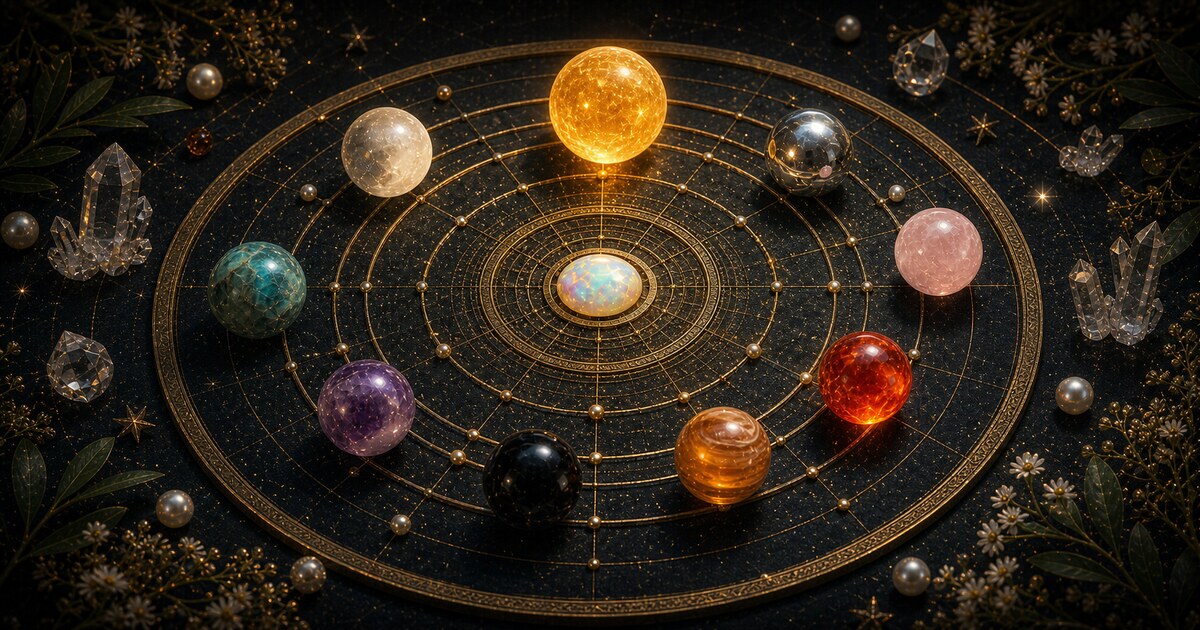
When astrologers refer to “planets,” they use the term loosely to include the Sun and Moon (technically a star and a satellite, respectively), along with the eight planets of our solar system from Mercury through Pluto. Some astrologers also include asteroids like Chiron, Ceres, or Juno, and mathematical points like the North and South Nodes of the Moon. In this guide, we will focus on the ten traditional celestial bodies used in most natal chart interpretation: the Sun, Moon, Mercury, Venus, Mars, Jupiter, Saturn, Uranus, Neptune, and Pluto.
Understanding the planets is fundamental to reading any natal chart. Once you know what each planet represents, you can begin to interpret its meaning based on which sign it occupies (how it expresses itself), which house it falls in (where in your life it operates), and what aspects it makes to other planets (how it interacts with other parts of your personality).
The Three Categories of Planets
The ten planets used in natal astrology are traditionally divided into three categories based on their orbital speed and the nature of their influence. Understanding these categories helps you know which placements are most personally specific to you and which are shared with your entire generation.
Personal Planets: Your Individual Personality
The personal planets — Sun, Moon, Mercury, Venus, and Mars — move relatively quickly through the zodiac, changing signs anywhere from every few days (Moon) to every month or two (Mars). Because they move fast, their sign and house placements are highly individual. Two people born even a few days apart might have different Mercury, Venus, or Mars signs. These planets shape the most tangible, day-to-day aspects of your personality: how you think, communicate, love, desire, and assert yourself.
Social Planets: Your Relationship with Society
Jupiter and Saturn are sometimes called the social planets because they bridge the personal and collective levels. They move at a moderate pace, spending one to two and a half years in each sign. Their sign placements are shared by age groups rather than entire generations, and they describe how you relate to social structures, institutions, growth opportunities, and the responsibilities of adult life. Their house placements and aspects remain highly individual and personally meaningful.
Generational Planets: Collective Themes
Uranus, Neptune, and Pluto are the generational or outer planets. They move so slowly through the zodiac — spending seven to twenty years or more in a single sign — that their sign placements are shared by entire generations. Uranus in Aquarius, Neptune in Pisces, Pluto in Capricorn: these are generational signatures that describe the collective themes, challenges, and revolutions of large groups of people born during the same era. However, their house placements and aspects to personal planets are unique to each individual and can indicate profound areas of personal transformation, spiritual awakening, and creative genius.
The Sun: Your Core Identity
Rules: Leo | Exaltation: Aries | Detriment: Aquarius | Fall: Libra
Orbit: Approximately 1 year through the zodiac (about 30 days per sign)
The Sun is the center of your natal chart, just as it is the center of our solar system. It represents your core identity, your ego, your willpower, your creative vitality, and the fundamental sense of self around which everything else revolves. The Sun sign answers the most basic question of identity: “Who am I?” It describes the qualities you most identify with, the person you are actively becoming, and the kind of self-expression that gives your life meaning and purpose.
The Sun is associated with the father, with authority figures, with leadership, and with the conscious, waking self. It represents the part of you that wants to shine, create, and leave a mark on the world. Unlike the Moon, which operates instinctively and unconsciously, the Sun operates through conscious choice and deliberate self-expression.
The Sun is the first of the Big Three and the most commonly known astrological placement. However, its full meaning in a natal chart depends heavily on its house placement, aspects, and relationship to the Ascendant and Midheaven. A Sun in the twelfth house will express its Leo qualities very differently than a Sun in the tenth house, even if both are in the same sign.
Planetary Dignity and the Sun
In traditional astrology, each planet has signs where it functions best (dignity and exaltation) and signs where it is challenged (detriment and fall). The Sun rules Leo, where it expresses itself most naturally — with confidence, creativity, warmth, and generous self-expression. It is exalted in Aries, where its vitality and leadership are amplified by Mars’s pioneering energy. It is in detriment in Aquarius, where the collective focus can challenge the Sun’s need for individual recognition. And it is in fall in Libra, where the drive to accommodate others can undermine the Sun’s need for self-assertion.
These dignities do not make one Sun sign “better” than another — they simply describe different dynamics and challenges in how the Sun’s energy operates.
The Moon: Your Emotional Core
Rules: Cancer | Exaltation: Taurus | Detriment: Capricorn | Fall: Scorpio
Orbit: Approximately 28 days through the zodiac (about 2.5 days per sign)
The Moon is the fastest-moving body in the natal chart and represents your emotional nature, instinctive reactions, subconscious patterns, comfort needs, and the qualities you inherited from your mother or primary caretaker. While the Sun represents your conscious identity, the Moon represents your unconscious emotional life — the feelings, needs, and habits that operate beneath the surface and shape your experience of life at the most fundamental level.
The Moon governs your comfort zone, your nurturing style, and what makes you feel safe. It describes how you respond to stress, what you do when you need to recharge, and the environment you need in order to feel emotionally secure. In intimate relationships, the Moon sign is often more important than the Sun sign, because it reveals the emotional core that a partner must connect with for the relationship to feel truly satisfying.
The Moon sign is the second of the Big Three and changes signs every two and a half days, making it highly individual. Your Moon sign can be the same as your Sun sign (a “new Moon” type personality with concentrated energy) or in a completely different element, creating a dynamic tension between your outer identity and inner emotional world.
The Moon is dignified in Cancer, where it expresses its nurturing, intuitive, and emotionally responsive qualities most naturally. It is exalted in Taurus, where its need for security is met by earthy stability and sensual comfort. In Capricorn (detriment) and Scorpio (fall), the Moon faces greater challenges in expressing its vulnerable, receptive nature, though these placements can ultimately produce profound emotional strength and depth.
Mercury: Your Mind and Voice
Rules: Gemini and Virgo | Exaltation: Virgo (or Aquarius, debated) | Detriment: Sagittarius and Pisces | Fall: Pisces (or Leo, debated)
Orbit: Approximately 1 year (never more than 28 degrees from the Sun)
Mercury represents the mind, intellect, communication, learning, and the exchange of information. It governs how you think, how you process information, how you express your ideas, and how you learn new things. Mercury’s sign placement describes your mental style — whether you think in abstract concepts or concrete details, whether you communicate directly or indirectly, whether you learn best through reading, listening, doing, or observing.
Mercury also governs everyday commerce, short trips, siblings, neighbors, and the practical mechanics of daily communication — emails, phone calls, conversations, and the constant flow of information that constitutes modern life. When Mercury is prominent in a chart (angular, heavily aspected, or chart ruler), the person tends to be verbally or intellectually oriented, possibly drawn to writing, teaching, speaking, or any field that involves the exchange of ideas.
Because Mercury never strays more than 28 degrees from the Sun, your Mercury sign is always the same as your Sun sign or one of the two adjacent signs. This means a Leo Sun can only have Mercury in Cancer, Leo, or Virgo — a fact that creates natural compatibility between your identity and your communication style.
Mercury Retrograde in the Natal Chart
If Mercury was retrograde (appearing to move backward through the zodiac) at the time of your birth, your mental processes may have a more internalized, reflective quality. Natal Mercury retrograde can indicate someone who thinks carefully before speaking, revises and rethinks ideas extensively, or has a communication style that is better suited to writing than spontaneous conversation. It does not indicate intellectual deficit — many brilliant thinkers and writers have natal Mercury retrograde. It simply suggests a more inward-directed mental process.
Venus: Your Heart and Aesthetics
Rules: Taurus and Libra | Exaltation: Pisces | Detriment: Scorpio and Aries | Fall: Virgo
Orbit: Approximately 1 year (never more than 48 degrees from the Sun)
Venus represents love, beauty, pleasure, values, attraction, and the things that bring you joy and satisfaction. It governs how you express affection, what you find beautiful and attractive, your aesthetic preferences, your relationship style in love, and your relationship with money and material comfort (Venus shares rulership of finances with the second house). Venus is the planet of harmony, grace, and enjoyment of life’s pleasures.
In matters of love, Venus describes what you are attracted to, how you behave when you are in love, what you need to feel valued in a relationship, and your overall approach to romantic partnership. It works in tandem with Mars (the planet of desire and passion) to create the full picture of your romantic and sexual nature. Venus is the receptive principle — what you attract and are attracted to — while Mars is the active principle — how you pursue what you want.
Venus also governs artistic sensibility, fashion sense, social grace, and diplomatic ability. A strong Venus in the natal chart often indicates someone with artistic talent, refined taste, or a natural ability to create harmony in social situations. The house placement of Venus shows where you most naturally experience pleasure and where you pour your aesthetic and relational energy.
Like Mercury, Venus never strays far from the Sun (no more than 48 degrees), so your Venus sign is always the same as your Sun sign or within two signs of it. This limits the Sun-Venus combinations but also ensures a degree of natural resonance between your identity and your values.
Mars: Your Drive and Desire
Rules: Aries (and traditionally Scorpio) | Exaltation: Capricorn | Detriment: Libra (and Taurus) | Fall: Cancer
Orbit: Approximately 2 years through the zodiac (about 6-7 weeks per sign, longer when retrograde)
Mars represents action, desire, aggression, ambition, physical energy, sexuality, courage, and the warrior archetype. It is the planet that gets things done — the drive that pushes you forward, the anger that signals boundaries have been violated, and the passion that fuels your pursuit of what you want. Mars describes how you assert yourself, how you compete, how you handle conflict, and what motivates you to take action.
Mars is the first planet that can be in any sign regardless of Sun position, making it more individually variable than Mercury or Venus. Your Mars sign describes your energy style, your anger style, and your sexual style. Mars in Aries is direct, impulsive, and competitive. Mars in Taurus is slow to start but relentless once in motion. Mars in Scorpio is strategic, intense, and psychologically powerful. Mars in Pisces is indirect, imaginative, and motivated by emotional or spiritual ideals.
In career contexts, Mars describes how you pursue professional goals and what kind of work energizes you. In physical health, it governs your vitality, your relationship with exercise and physical exertion, and your susceptibility to inflammation, fever, or injuries. The house placement of Mars shows the area of life where you direct the most energy, ambition, and assertive force.
Mars Retrograde in the Natal Chart
Mars retrograde occurs less frequently than Mercury retrograde, happening approximately every two years for about two months. People born during Mars retrograde may find that their assertive energy is directed more inwardly than outwardly. They might struggle with expressing anger directly, preferring to channel competitive drive into personal challenges rather than external competition. Mars retrograde can also indicate someone who reconsiders their desires and motivations more carefully than most, avoiding impulsive action in favor of deliberate, well-considered moves.
Jupiter: Your Growth and Expansion
Rules: Sagittarius (and traditionally Pisces) | Exaltation: Cancer | Detriment: Gemini (and Virgo) | Fall: Capricorn
Orbit: Approximately 12 years (about 1 year per sign)
Jupiter is the great benefic of astrology — the planet of expansion, growth, abundance, optimism, and good fortune. It represents your capacity for faith, your relationship with opportunity, your philosophical and spiritual inclinations, and the areas of life where things tend to come easily or abundantly. Jupiter expands whatever it touches, bringing more of it into your life — for better or worse, since too much of even a good thing can become excessive.
Jupiter governs higher education, long-distance travel, philosophy, religion, law, publishing, and the search for meaning and truth. It describes your worldview, your sense of ethics, your relationship with abundance, and your capacity for generosity and goodwill. A well-placed Jupiter can indicate good luck, opportunities for growth, and an optimistic outlook. A challenged Jupiter might manifest as overindulgence, overconfidence, self-righteousness, or an inability to set limits.
Because Jupiter spends about a year in each sign, its sign placement is shared by everyone born within that year. Its individual significance comes more from its house placement and aspects. Jupiter in the seventh house brings growth and abundance to partnerships. Jupiter in the second house can indicate financial good fortune. Jupiter conjunct the Sun amplifies confidence and vitality.
Saturn: Your Challenges and Mastery
Rules: Capricorn (and traditionally Aquarius) | Exaltation: Libra | Detriment: Cancer (and Leo) | Fall: Aries
Orbit: Approximately 29.5 years (about 2.5 years per sign)
Saturn is the great taskmaster of astrology — the planet of discipline, limitation, responsibility, structure, time, and hard-won mastery. Where Jupiter expands, Saturn contracts. Where Jupiter says “yes, more,” Saturn says “not yet, earn it.” Saturn represents the areas of life where you face your greatest challenges, where you are tested, where you must develop patience and discipline, and where you ultimately build the most lasting and meaningful structures.
Saturn has a reputation as a “malefic” in traditional astrology, and its transits can indeed correspond with difficult periods of restriction, loss, or confrontation with reality. But Saturn is also the planet that builds character, develops resilience, and creates lasting achievement. The areas of life governed by Saturn in your chart may not come easily, but they are often the areas where you do your most important work and leave your most enduring legacy.
The Saturn return, which occurs approximately every 29.5 years (first around ages 27-30, second around 56-60), is one of the most significant astrological events in a person’s life. It marks a passage into a new level of maturity, responsibility, and self-definition. Understanding your natal Saturn — its sign, house, and aspects — is key to navigating Saturn returns and Saturn transits with wisdom and resilience.
Uranus: Your Revolution and Awakening
Rules: Aquarius (modern) | Exaltation: Scorpio (debated) | Detriment: Leo | Fall: Taurus (debated)
Orbit: Approximately 84 years (about 7 years per sign)
Uranus is the planet of sudden change, revolution, innovation, individuality, and awakening. It represents the urge to break free from convention, to rebel against the status quo, to think independently, and to embrace the new and unconventional. Uranus disrupts established patterns and structures, sometimes dramatically and without warning, in order to create space for something more authentic and progressive.
Because Uranus spends about seven years in each sign, its sign placement is generational. Everyone born during the same seven-year period shares the same Uranus sign, and this describes the collective style of rebellion, innovation, and social change that generation brings to the world. The individual significance of Uranus comes from its house placement and aspects to personal planets. Uranus conjunct the Sun creates a highly individualistic, unconventional personality. Uranus in the seventh house can indicate unusual or non-traditional relationships.
Uranus transits, particularly the Uranus opposition (around age 42, the famous “midlife crisis”), can trigger sudden upheavals, breakthroughs, and liberating changes. These events, while often shocking, are ultimately designed to wake you up to aspects of yourself that have been suppressed or ignored.
Neptune: Your Dreams and Dissolution
Rules: Pisces (modern) | Exaltation: Cancer (debated) | Detriment: Virgo | Fall: Capricorn (debated)
Orbit: Approximately 165 years (about 14 years per sign)
Neptune is the planet of dreams, imagination, spirituality, illusion, compassion, and the dissolution of boundaries. It represents the longing for transcendence — the desire to merge with something greater than the individual self, whether through art, music, spiritual practice, romantic love, or less constructive outlets like addiction and escapism. Neptune dissolves the sharp edges of reality, creating a realm of inspiration and enchantment but also confusion and deception.
Neptune spends about fourteen years in each sign, making its sign placement deeply generational. The individual significance of Neptune comes from its house placement and aspects. Neptune in the first house can give a chameleon-like, ethereal quality to the personality. Neptune conjunct Venus intensifies artistic sensitivity and romantic idealism. Neptune square the Sun can create confusion about identity or a tendency to idealize the self or others.
A strong natal Neptune is common among artists, musicians, poets, healers, and spiritual practitioners — anyone whose work involves tapping into the invisible, the imaginal, or the transcendent. The challenge of Neptune is maintaining connection with practical reality while honoring the call to something beyond the material world.
Pluto: Your Transformation and Power
Rules: Scorpio (modern) | Exaltation: Aries or Pisces (debated) | Detriment: Taurus | Fall: Libra or Virgo (debated)
Orbit: Approximately 248 years (about 12-31 years per sign, highly variable due to eccentric orbit)
Pluto is the planet of transformation, power, death and rebirth, the shadow, and the deepest levels of psychological and spiritual change. It represents the parts of life where you must confront your own shadow, surrender control, undergo destruction and regeneration, and emerge fundamentally transformed. Pluto does not do anything halfway — its processes are total, irreversible, and aimed at nothing less than complete metamorphosis.
Pluto’s extremely slow orbit (and its eccentric path, which means it spends much longer in some signs than others) makes its sign placement the most generational of all. Entire eras are defined by Pluto’s sign — Pluto in Leo (the Baby Boomers), Pluto in Virgo (Generation X), Pluto in Libra and Scorpio (Millennials), Pluto in Sagittarius and Capricorn (Gen Z). The individual significance of Pluto comes from its house placement and aspects, which can indicate areas of life where you experience the most profound transformation, power dynamics, and encounters with the shadow.
Pluto transits to personal planets are among the most intense and transformative experiences in astrology. They can correspond with periods of crisis, loss, and destruction of old structures, followed by regeneration and empowerment. Understanding your natal Pluto helps you understand where your deepest reservoirs of psychological power lie and what kinds of transformative experiences your soul is drawn toward.
Retrograde Planets in the Natal Chart
Any planet except the Sun and Moon can appear to be retrograde (moving backward through the zodiac) at the time of your birth. A retrograde planet in the natal chart does not indicate something broken or negative — it suggests that the planet’s energy is directed more inwardly than outwardly. The qualities associated with that planet may take longer to develop or may express themselves in more private, reflective, or unconventional ways.
Mercury retrograde natal is the most common retrograde placement and can indicate a thinker who revises extensively, processes ideas internally before sharing them, or has an unconventional communication style. Venus retrograde natal can suggest unusual values, an unconventional approach to love, or a tendency to keep romantic feelings private. Mars retrograde may internalize competitive drive. Jupiter retrograde may seek growth through inner development rather than external expansion. Saturn retrograde may internalize authority and discipline. The outer planets (Uranus, Neptune, Pluto) are retrograde about 40-44% of the time, so retrograde placements for these planets are very common and carry less individual significance.
How Planets Shape Your Personality Together
No planet operates in isolation. The aspects between your planets create a web of interactions that is the real source of your personality’s complexity and uniqueness. A Sun-Moon trine creates inner harmony between identity and emotion. A Mars-Saturn square creates tension between desire and discipline that can either paralyze or motivate. A Venus-Jupiter conjunction amplifies love, generosity, and aesthetic pleasure.
The planets also work together through their house placements and rulership networks. The ruler of your Ascendant connects to the planet that rules the sign on your Ascendant. That planet, wherever it falls in the chart, becomes your chart ruler and influences your overall life direction. Understanding these networks of connection is the art of chart synthesis — the ability to read a natal chart as an integrated whole rather than a collection of isolated parts.
Explore your planetary placements by generating your free natal chart and begin understanding how each planet shapes your unique personality and life path.